Aquatic Invasive Species
The fight to protect Lake Tahoe's waterways from invasive aquatic weeds — a community-wide effort spanning decades.
The Growing Problem
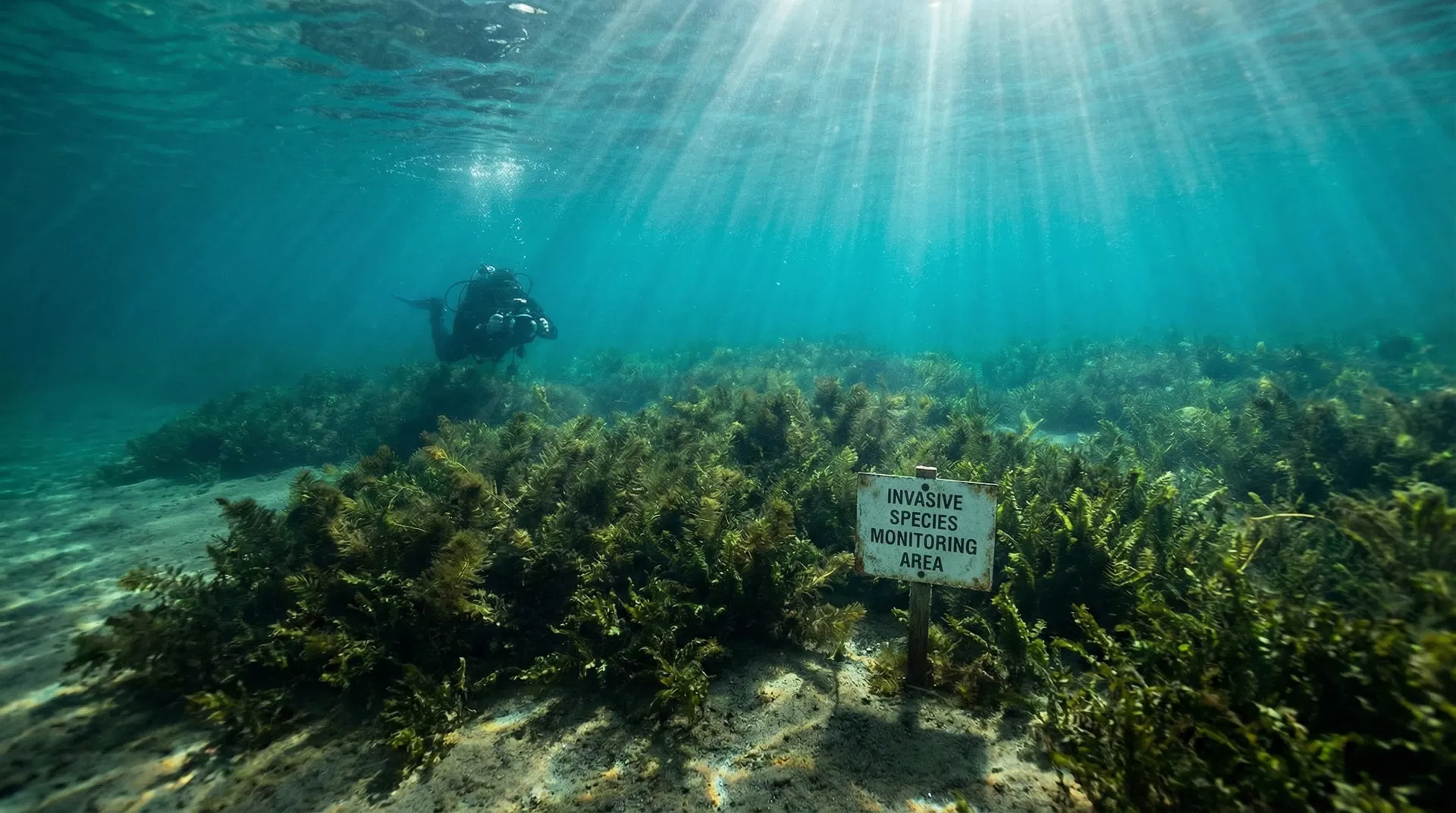
Aquatic weeds have spread to many areas around Lake Tahoe, creating the urgency that lake-wide collaboration is needed to control aquatic invasive species (AIS). The 2015 Lake Tahoe Aquatic Invasive Species Implementation Plan lists the Tahoe Keys lagoons as the highest priority areas for control of AIS in Lake Tahoe.
The largest and most persistent population of aquatic weeds grows in the Tahoe Keys lagoons, sprawling over 172 acres of waterways. There is growing concern about the spread of aquatic invasive and nuisance plant species which cover over 90 percent of the Tahoe Keys lagoons.
TKPOA has developed an Integrated Aquatic Weed Management Plan (IMP) that is based on the most cost-effective mix of identified weed control methods. While harvesting and bottom barriers are currently allowed, the use of aquatic herbicides is being studied in partnership with TRPA and the Lahontan Regional Water Quality Control Board.
Key Initiatives
Collaborative Multi-Stakeholder Process
TKPOA has developed an Integrated Aquatic Weed Management Plan (IMP) in partnership with TRPA (Tahoe Region Planning Agency), Lahontan Regional Water Quality Control Board, and TRCD (Tahoe Resource Conservation District). This collaborative approach ensures scientifically sound and regulatory-compliant management strategies.
EIR/EIS Process
Led by TRPA, a comprehensive Environmental Impact Report/Environmental Impact Statement (EIR/EIS) assessment of the impacts of aquatic herbicides is underway to provide a scientific basis for regulatory consideration. This process involves extensive public review and scientific analysis.
Best Management Practices (BMP)
TKPOA is working to develop ways to minimize the quantity of fine sediments in the Tahoe Keys lagoon water. The primary method to reduce fine sediments is by increasing the number of properties that have BMPs in place. All primary residence construction plans requiring City approval must be reviewed by ACC to ensure BMPs are included.
Controlled Methods Test (CMT)
The Controlled Methods Test is an ongoing scientific study examining the effectiveness and safety of various aquatic weed control methods, including aquatic herbicides. Results from the CMT will inform future management decisions and regulatory approvals. Updates are available through the Resident Portal.
Partner Organizations
Stay Updated on AIS Management
Access the latest CMT updates, reports, and community communications through the TKPOA Resident Connect Portal.
Access Resident Portal